PHƯƠNG PHÁP LÀM DẠNG BÀI YES/ NO/ NOT GIVEN
PHƯƠNG PHÁP LÀM DẠNG BÀI YES/ NO/ NOT GIVEN
Yes/ No/ Not Given là dạng câu hỏi “khó ăn” và dễ mắc sai lầm trong IELTS Reading, nó yêu cầu thí sinh phải xác định thông tin rất chi tiết trong bài. Hy vọng bài viết này sẽ giúp bạn giải quyết nhanh gọn dạng bài Yes/ No/ Not Given và dễ dàng phân biệt nó với dạng bài True/ False/ Not Given.
I. Thế nào là dạng bài Yes/ No/ Not Given
Trên thực tế, nhiều bạn thường phân vân giữa 2 dạng bài “Yes/ No/ Not Given” và “True/ False/ Not Given” hoặc không hiểu rõ bản chất của “Yes”, “No” và “Not Given” để dẫn đến nhiều lỗi sai trong hai dạng bài này.
Điểm khác biệt lớn nhất giữa hai dạng bài này là True/ False/ Not Given tập trung tìm thông tin thực tế trong bài đọc (fact) còn Yes/ No/ Not Given hướng đến tìm quan điểm, ý kiến của tác giả trong bài viết (opinion)
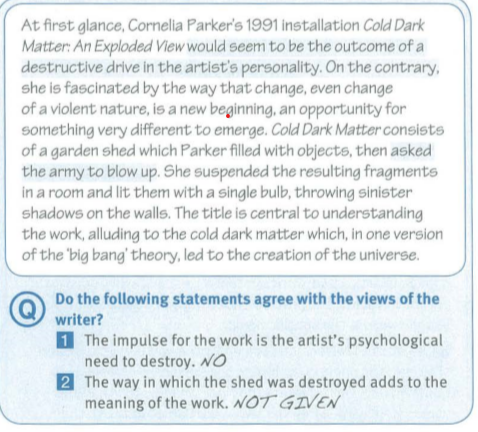
YES: Khi ý kiến trong phần nhận định trùng khớp với quan điểm của tác giả đưa ra trong bài đọc
NO: Khi ý kiến trong phần nhận định trái ngược với quan điểm của tác giả trng bài đọc
NOT GIVEN: Khi thông tin trong nhận định không được đề cập trong bài đọc
II. Cách làm dạng bài “YES/ NO/ NOT GIVEN”
Bước 1: Đọc kĩ nhận định trong đề bài
Gạch chân các từ khóa (keyword) trong câu nhận dịnh để định vị đoạn văn chứa thông tin liên quan trong bài đọc
Hiểu đầy đủ ý nghĩa của câu nhận định, không phụ thuộc quá nhiều vào keyword.
NOTE: Khi đọc câu nhận định, cần chú ý tới các cụm từ
+ Các câu có chứa các từ mang nghĩa mạnh như “always”, “never”, “only”, … à thường là “No”
+ Các câu có chứa các từ “can”, “may”, “might” à thường là “Yes”
+ Các tính từ (Adjective), trạng từ (Adverb) miêu tả đi kèm luôn được chú ý để so sánh với nghĩa của thông tin trong bài đọc. à thường là Not Given.
Bước 2: Tìm câu trả lời tương ứng
Chú ý đến các từ đông nghĩa (synonym), các từ trái nghĩa (antonym) hoặc cách paraphrase trong bài đọc
Các câu hỏi xuất hiện lần lượt theo trình tự trong bài đọc; có nghĩa thông tin trả lời câu 2 sẽ xuất hiện sau thông tin trả lời câu 1 và trước thông tin trả lời câu 3 trong bài đọc.
III. Example
Making a change
How easy is it for us to change our lives – and why?
[…] Most college graduates would not do quite the same thing. However, studies do show that in teenage years, people are more likely to try out new experiences. Instead of following the family career path, for example, and working his way uo the same organization like his grandfather did, a 15-year-old may dream about becoming a traveler – only to find in his early 20s that this fascination with new places is declining and change is less attractive. Thi age-related trend can be observed in all cultures.
The reason why people all over the world become less keen to change as they get older may be because people’s lives generally follow similar patterns and involve similar demands. Most people, wherever they are, aim to find a job and a partner. As they get older, they may have young children to look after and possibly elderly family members. These responsibilities cannot be achieved without some degree of consistency, which means that new experiences and ideas may not have a place in the person’s life. New experiences may bring excitement but also insecurity, and so most people prefer to stay with familiar.
However, not every individual is the same. One toddler may want to play a different game every day and get fed up if nothing changes at the nursery. Another may seek out and play with the same children and toys on every visit. Young children who avoid new experiences will grow up to be more conventional than others. Psychologists argue that those who have more open personalities as children are more open than others might be when they are older. They also suggest that young men have a greater interest in novelty than women, although, as they age, this desire for new experiences fades more quickly than it does in woman.
[Source: Complete IELTS bands 4-5 (Student’s book), Unit 6, Page 58]
Do the following statements agree with the claims of the writer in the reading passage?
- Teenagers are more ready to have new experiences than young adults.
- Grandparents usually encourage their grandchildren to get a well-paid job.
- Life demands are different depending on which country you live in.
- Some toddlers find repetitive activities boring.
ĐÁP ÁN: Video hướng dẫn chi tiết
Trở về